By Paul Moody, Registered Osteopath (General Osteopathic Council), practising since 1991.
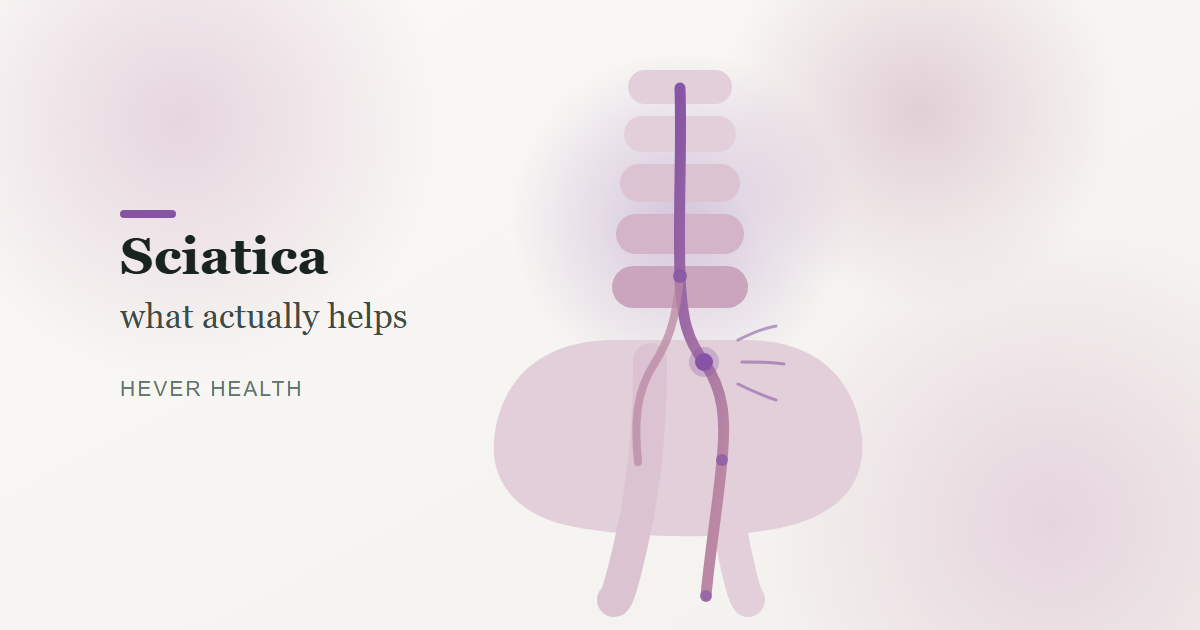
Sciatica is pain caused by irritation or compression of the sciatic nerve, the large nerve that runs from your lower back through the buttock and down the leg. It is common, and in most people it settles within weeks, however alarming it feels at the time. In thirty-odd years of practice I have treated a lot of it, and the same questions come up every time: is this sciatica, what can I do about it today, and is it serious? This page answers all three honestly.
Is it actually sciatica?
True sciatica is leg-dominant. The leg or buttock pain is usually worse than the back pain, often sharp or burning, and it may come with tingling, numbness or weakness in the leg or foot. If your pain sits squarely in the lower back and does not travel below the knee, it is probably back pain rather than sciatica, and it behaves differently.
Plenty of things imitate it. Hip joint problems, sacroiliac joint irritation and tight buttock muscles pressing on the nerve can all produce similar pain down the leg. Part of an osteopath’s job is telling these apart, because the right treatment depends on the actual source.
What causes it
The most common culprits, roughly in order:
- A herniated disc, often called a slipped disc, where disc material presses on the nerve root as it leaves the spine. This is the classic cause in people under 50.
- Spinal stenosis, a narrowing of the spinal canal that irritates the nerve, more common from middle age onwards. It typically eases when you sit or lean forward.
- Muscle-related pressure, where spasm or tension in the deep buttock muscles irritates the nerve along its path.
Knowing the cause matters less than people expect in the early weeks, because the initial self-care is broadly the same. It matters a great deal if things are not improving.
What helps in the first two weeks
- Keep moving. This is the single most useful thing you can do. Gentle, regular movement, short walks and changing position often all help the nerve settle. Bed rest used to be the standard advice; we now know it slows recovery.
- Find your position of relief. Many people get ease lying on their back with knees bent and feet flat, or lying on the less painful side with a pillow between the knees. Use whatever position calms the leg pain, and use it to break up the day rather than to stay still for hours.
- Heat helps most people. A hot water bottle or heat pack on the lower back or buttock for 15 to 20 minutes relaxes the surrounding muscle.
- Ask a pharmacist about short-term pain relief. They can advise what suits you. Short-term pain relief earns its keep by letting you keep moving, and movement is what drives recovery. The NHS sciatica page covers the standard medical advice well.
How to relieve sciatica: gentle exercises that usually help
These four are the ones I give most often. Go gently, build up gradually, and use the stop rule at the end of this section.
1. Knee to chest
Lie on your back with both knees bent, feet flat on the floor. Bring one knee up toward your chest, hands behind the thigh, and hold for 20 to 30 seconds. Lower it slowly and switch sides. Repeat 3 times each side.
2. Sciatic nerve glide
Sit upright on a chair. Straighten the affected leg out in front of you with the toes pulled up toward you, at the same time looking up slightly. Then lower the leg and look down. It is a smooth, slow pumping movement, not a stretch to hold. Do 10 slow repetitions, 2 or 3 sets a day.
3. Prone press-up
Lie face down, hands under your shoulders as if about to do a press-up. Keeping hips on the floor, gently press your upper body up, let the lower back arch, then lower slowly. Only go as far as is comfortable. 10 repetitions, once or twice a day. Many disc-related sciaticas like this movement; some do not, so let the stop rule decide.
4. Figure-4 stretch
Lie on your back, knees bent. Cross the ankle of the affected leg over the opposite thigh, then draw that thigh toward your chest until you feel a stretch deep in the buttock. Hold for 20 to 30 seconds, repeat 3 times. This targets the deep buttock muscles that can press on the nerve.
The stop rule: if an exercise makes the leg pain worse, or makes it spread further down the leg, stop that exercise. Pain moving up toward the back is generally fine; pain moving down the leg is your signal to back off. Expect a mild stretching ache. If the nerve pain itself sharpens, that exercise is not for you this week.
What tends to make it worse
Prolonged sitting is the big one. Sitting loads the discs and keeps the nerve under pressure, so a day at a desk followed by an evening on the sofa is close to the worst thing you can do with sciatica. Break sitting up every 30 minutes, even for a minute of standing.
The other two are bed rest, which weakens the muscles the spine relies on while doing nothing for the nerve, and panic. Sciatica hurts out of all proportion to the damage behind it in most cases. The pain is real, but pain intensity is a poor guide to seriousness here, and fear of movement slows people down more than the nerve does.
Red flags: when it is not a wait-and-see problem
A small number of cases need urgent medical attention, not an osteopath and not patience. Go to A&E or call 111 immediately if you have any of these:
- Numbness or tingling in the saddle area, the parts of you that would touch a bike seat
- New difficulty controlling your bladder or bowels, or numbness when you wipe
- Sciatica in both legs at once
- Rapidly worsening weakness in the leg or foot, such as the foot starting to drag
These can indicate cauda equina syndrome, a compression of the nerves at the base of the spine that is a medical emergency. It is rare, and being clear about it is part of treating sciatica responsibly. Separately, see your GP promptly if the pain came with unexplained weight loss, fever, or follows a significant fall or accident.
How an osteopath approaches sciatica
Assessment comes first. A proper history, then a physical examination of the lumbar spine, pelvis and hips, testing which movements and positions provoke or relieve the leg pain. The aim is to establish what is actually irritating the nerve and, just as importantly, to rule out the things that need referring on. Osteopaths are trained and regulated to do exactly that; the profession is overseen by the General Osteopathic Council.
Treatment is hands-on and specific to what we find: soft tissue techniques for the muscle spasm that almost always comes along for the ride, gentle joint articulation and mobilisation to restore normal movement in the lower back and pelvis, and a progressive exercise plan so improvement continues between appointments. The goal is to reduce the pressure and irritation around the sciatic nerve and give the body the conditions to do its own healing, which it is generally very good at.
I am careful with promises, because honest treatment of sciatica does not include a cure in three sessions. What it reliably does is settle the muscular guarding and restore movement, which shortens the miserable middle phase of recovery. Most of the sciatica I see improves substantially over four to eight weeks; if you would like an assessment, our osteopathy page explains what to expect from an appointment.
Sciatica FAQ
How long does sciatica take to go away?
Most cases improve substantially within 4 to 6 weeks and settle fully within 12. A stubborn minority takes longer, which is when assessment matters more, not less. If you are getting worse rather than better after two weeks of sensible self-care, get it looked at.
Should I see an osteopath or a physio for sciatica?
Either can help, and there is more overlap than tribal loyalty on both sides admits. We compare the two honestly in our guide to osteopathy versus physiotherapy. The short version: the individual practitioner matters more than the title.
Can I exercise with sciatica?
Yes, and you should, within the stop rule above. Walking, swimming and the gentle exercises on this page are all usually helpful. What to avoid short-term: heavy lifting, deep forward bending under load, and long unbroken sitting, including long drives.
Do I need a scan?
Usually not. Scans of people with no back pain routinely show disc bulges, so imaging often confuses more than it clarifies. A scan earns its place when red flags appear, when there is progressive weakness, or when symptoms have not improved after several weeks of proper treatment and a surgical opinion is being considered.
Sciatica does not care where you live, but if you are nearby, patients come to us from across west Kent and the surrounding area; see the areas we serve.
Book an appointmentor call us on 01732 651359